

As we approach the Bank of Canada’s next interest rate announcement on March 18, many buyers and homeowners are wondering whether rates are about to change again. While markets are always evolving, current economic signals suggest the Bank of Canada is likely to hold its policy rate steady for now.
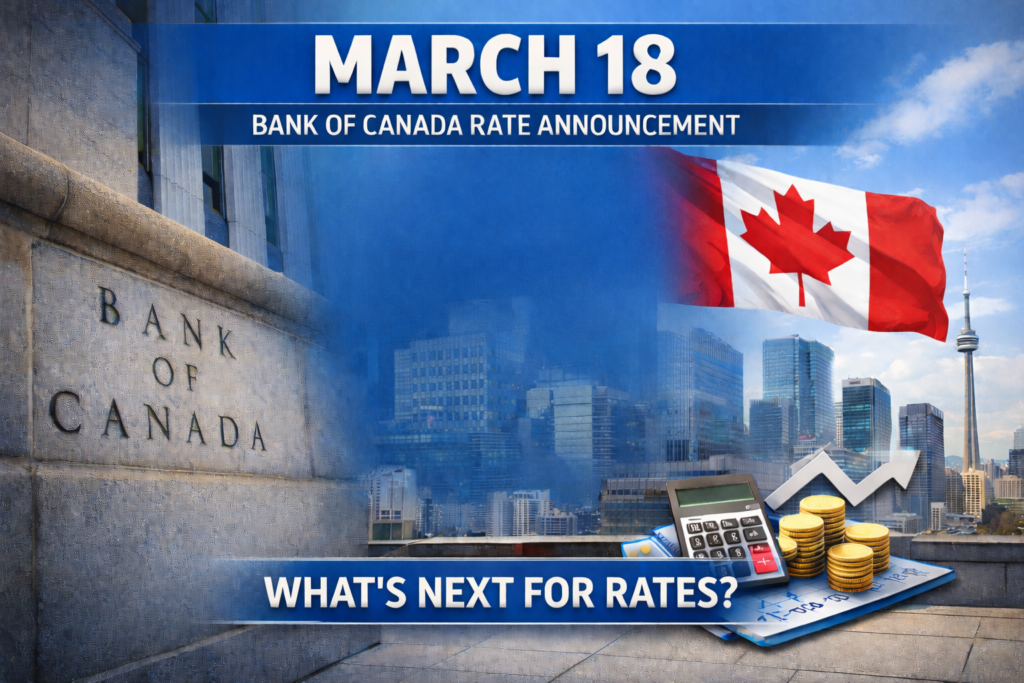
Here’s what’s happening behind the scenes and how it may affect mortgage rates and the housing market in Saskatoon.
Why the Bank of Canada Is Expected to Hold Rates
The Bank of Canada currently has its overnight policy rate at 2.25%, and economists broadly expect it to remain at that level in the near term.
The reason for this pause is relatively simple: inflation has cooled compared to previous years, but the global economic outlook remains uncertain. The Bank of Canada typically prefers to wait and evaluate incoming data before making additional moves.
Interest rate decisions also work with a lag. The impact of previous rate changes can take 12–24 months to fully flow through the economy, meaning the Bank is still watching how earlier policy adjustments affect inflation and growth.
Because of this, holding rates steady allows policymakers to avoid reacting too quickly while monitoring inflation trends and economic stability.
Global Conflict and Oil Prices
One factor currently adding uncertainty to global markets is the ongoing conflict involving Iran, which has increased concerns about energy supply disruptions.

When geopolitical tensions rise in oil-producing regions, oil prices often move higher, which can increase inflation expectations globally. Higher energy prices can filter through the economy via transportation costs, manufacturing, and consumer prices.
In financial markets, rising inflation expectations often push government bond yields higher, even if central banks do not change their policy rates. This matters because fixed mortgage rates in Canada are primarily driven by bond yields, not directly by the Bank of Canada.
That means global events — even those outside Canada — can sometimes cause short-term increases in fixed mortgage rates, regardless of what the central bank does.
What Does This Means for Mortgage Rates?
In simple terms:
- Variable rates are tied to the Bank of Canada’s policy rate
- Fixed rates are tied to government bond yields and market expectations
If the Bank of Canada holds its rate steady on March 18, variable-rate mortgages are unlikely to change immediately. However, fixed rates may still fluctuate depending on bond markets and global economic developments.
Saskatoon’s Housing Market: Inventory Still Extremely Tight
While interest rates often dominate headlines, supply and demand remain the biggest drivers of housing activity at the local level.
In Saskatoon, housing inventory remains very tight heading into the spring market, with available listings sitting near historic lows for this time of year. Low inventory means buyers are competing for a limited number of homes, which can continue putting upward pressure on prices.
Heading into March and April — traditionally the beginning of the busy spring market — we are already seeing strong buyer interest, especially among first-time buyers and investors.
If inventory remains constrained while demand stays strong, Saskatoon could continue experiencing a competitive market despite higher interest rates compared to previous years.
The Big Picture
Right now, three key factors are shaping the market:
- The Bank of Canada is expected to hold rates steady for the time being.
- Global events and oil prices could create short-term movement in fixed mortgage rates.
- Saskatoon housing supply remains extremely limited, which continues to support market activity.
For buyers and homeowners, this environment highlights the importance of understanding both interest rate trends and local market dynamics when making real estate decisions.